
Last night, I authored a Wikipedia article about my 5th-great-grandfather José de Aguilar-Amat, who was the Lieutenant Governor of Pinar del Río. Those who can speak Spanish and are interested in reading it can do so at this link. For your convenience, I have taken the liberty of writing an English version of the article below. Relevant citations can be found on Wikipedia. I have also added information under the “Family” section about his deeper ancestry that I felt was more suitable for my personal website. Perhaps I will mention these notes on his Wikipedia page as well, when I have the time to gather all the necessary documentation and cite it properly.
José de Aguilar-Amat y Fernández (1765–1829) was a Spanish military officer and colonial administrator, best known for his long service as Lieutenant Governor of Pinar del Río (also known as Nueva Filipina or Vueltabajo) in Cuba in the early 19th century. During his tenure, he was noted for defending the interests of local tobacco growers (vegueros) against the Tobacco Factory and for establishing one of the first organized postal services in the region.
First Years and Family
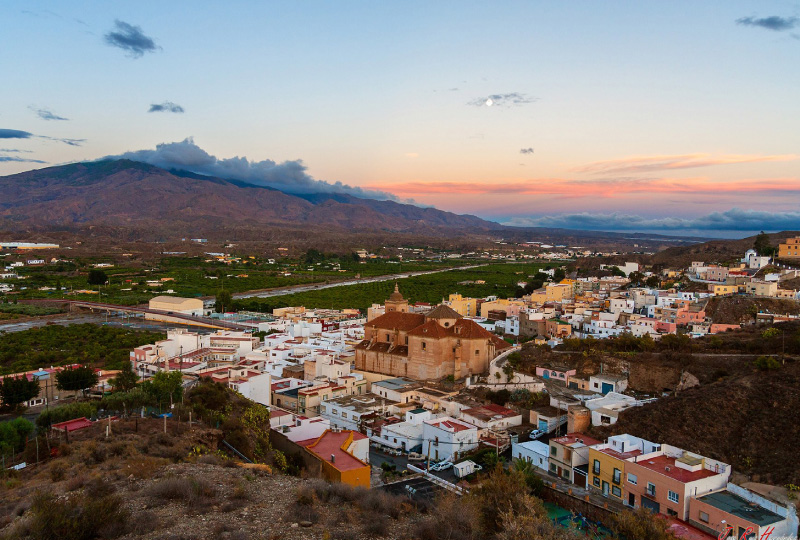
Born around 1765 in Gádor, José de Aguilar-Amat was the son of Juan de Aguilar-Amat and María Antonia Fernández. He came from a noble family from the Kingdom of Granada, called the Aguilar-Amat family. The family’s first ancestor was a man named Juan de Aguilar-Amat, who was probably born in the late 16th century. Juan was the son of Bartolomé Amat y Domínguez and Mariana de Aguilar. The order of his surnames was reversed because he was born after his father’s death. Through Mariana’s family, he descended from several prominent noblemen and monarchs. Many members of this family held respectable positions within Spanish society. One example is his relative Juan de Aguilar-Amat y Páramo, who was a captain and royal official in Yucatán, Mexico, later becoming the intendant of Havana. José de Aguilar-Amat pursued a military career, rising to the rank of Captain in the Havana Infantry Regiment by the late 1700s.
On December 23, 1807, in Pinar del Río, he married María Belén de la Paz de Meza, a native of Havana and daughter of Manuel de Meza and María del Carmen González. The couple had numerous children, with the names of twelve legitimate children recorded in Aguilar-Amat’s burial register: María de Paula, Antonia María, José, María de los Dolores, María Ruperta, Agustina, María de la Consolación, María de Belén, Juan Bautista, María del Carmen, Onofre, and Martín.
Lieutenant Governor of Pinar del Río
Aguilar-Amat served as Lieutenant Governor and Captain General of the jurisdiction of Pinar del Río (called Nueva Filipina at different times) for an extended period, documented at least from his marriage in 1807 until his death in 1829. By 1815, it was mentioned that he had been in office for 18 years.
Conflict Management with Native Americans
Early in his tenure, in 1800, Aguilar-Amat reported to his superiors on the activity of “a gang of Indians” (likely referring to groups of Apaches or other Native Americans deported to Cuba from New Spain), to whom he attributed a series of murders, cattle rustlings, and fires that he claimed had hampered the jurisdiction’s prosperity since 1796. He detailed specific damages, including 23 deaths, 13 injuries, and the destruction or abandonment of numerous haciendas. These reports influenced the decision of Cuba’s Governor, the Marquis of Someruelos, to oppose the transfer of more adult Apaches to the island.
Sources suggest that Aguilar-Amat’s perceptions were influenced by racial stereotypes of the time. For example, he theorized that the absence of Black runaways in the 1790s was because “the Indians had killed them all.” This racialized view (viewing Black people as “simple,” Native Americans as “barbaric murderers and thieves,” and Spaniards as “cunning and capable”) shaped their interpretation of rural conflicts. Later research indicated that evidence regarding the presence and activity of these indigenous groups was often nebulous and contradictory.
Administration and Demography
Aguilar-Amat observed and documented the significant population growth of Vueltabajo, attributing it mainly to the increase in the population of farmers (vegueros), which increased from 2,673 in 1787 to nearly 10,000 in 1813. In 1819, he conducted a census of his governorate that recorded 12,026 inhabitants, racially distributed among whites (5,871), free people of color (3,634) and slaves (3,633). Later data collected in 1821 revealed the structure of the tobacco plantations, showing a majority of small properties worked by white, free mulatto and free black families, often with few hired workers or slaves, highlighting the interracial coexistence in the tobacco sector.
Conflict with the Factoría de Tabacos
One of the most notable episodes of his administration was his defense of local tobacco growers against the demands and practices of the Real Factoría de Tabacos in Havana, the state monopoly that controlled the purchase and marketing of tobacco. Around 1813-1816, a serious conflict arose when the tobacco growers of Pinar del Río, particularly those in the Río Feo and Río Sequito areas, refused to deliver their crops to the Factoría. They argued that they had not received a fair and formally agreed-upon contract, as well as the low prices offered.
Aguilar-Amat sided with the tobacco growers, who considered him their defender and appointed him as their representative in 1815 for his knowledge of the matter and for being “their perpetual governor.” This stance put him at odds directly with factory officials, such as Superintendent José González Montoya (powerful at the time due to the resignation of Intendant Juan Aguilar-Amat, Aguilar-Amat’s cousin), Joaquín de Zayas, and Anselmo de Paula Arias. These officials accused Aguilar-Amat of obstructing their work, of failing to provide the required legal assistance to force the tobacco growers to hand over the tobacco, and even insinuated that he was inciting “insurrection” or “disobedience” when advising the growers.
Correspondence from the period shows Aguilar-Amat questioning the legality of the actions of the Factoría agents (such as the establishment of improvised courts outside the town without his authorization) and defending his own jurisdiction to maintain public order and avoid “pressures that would violate the neighborhood.” He argued that the vegueros had the right to demand a fair contract and that he, as their immediate superior, should channel their representations. The conflict came to involve the arrest of some vegueros and accusations of bribery of witnesses to testify against Aguilar-Amat, although the latter was denied. The case was referred to the Captain General of the island.
Establishment of Mail Service
Towards the end of his term in office in the 1820s, and faced with the growing population of Vueltabajo, Aguilar-Amat took the initiative to organize a postal service connecting Pinar del Río with Havana. This service began operating on December 1, 1828, financed by private individuals and using horses and coastal vessels, even before receiving official approval from the Captaincy General. It made two round trips per month, with pickup and drop-off points in Pinar del Río, Candelaria, Consolación del Sur, Los Palacios, and San Cristóbal, and in Havana. The service, staffed voluntarily by officials of the Royal Treasury, proved to be profitable.
Death
José de Aguilar-Amat died in Pinar del Río in early 1829, at the approximate age of 64. He was buried in the general cemetery of the Church of San Rosendo on March 31, 1829. He had made a will on February 3 of that year before the notary public, José Vicente Valdés. In it, he arranged to be shrouded in his military uniform and the cross of the Royal and Military Order of San Hermenegildo, of which he was a knight. He named his wife, María Belén de Meza, as his primary executor, and her, his twelve legitimate children, and his acknowledged natural son, Claudio José, as his heirs. He also requested masses for his soul, including the Mass of Saint Gregory.
Legacy
José de Aguilar-Amat is remembered in the history of Pinar del Río for his long service as Lieutenant Governor, his prominent role in defending the interests of local tobacco growers (vegueros) against the Factory’s monopoly, and for being the driving force behind the first organized postal service in the region. His legacy also includes heritage aspects, as he was the owner of the well-known Finca Aguilar. On these lands, located next to some “barracones”, he built a two-story house in 1819.
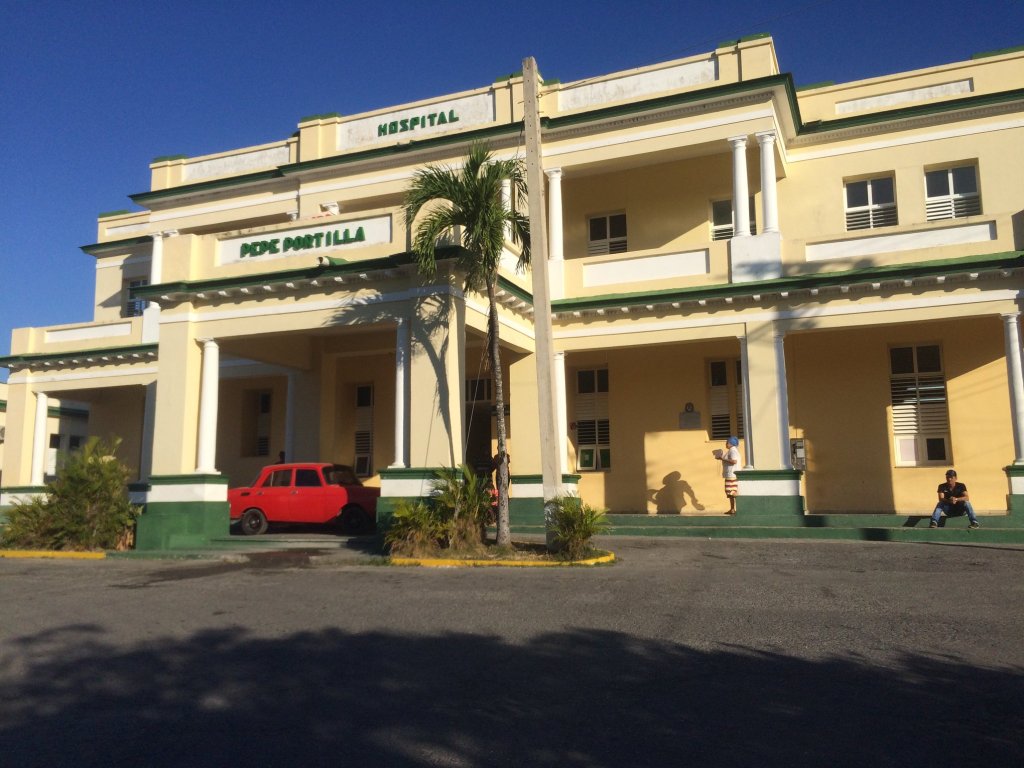
This farm, which contained a spring that fed a local stream, was later sold at a public auction in the Center of the Spanish Colony on April 25, 1902, for $3,600. The main house, with masonry basements and a roof of boards and tiles, was adapted as a country house with an investment of $1,500. The site of the former Finca Aguilar is currently occupied by the Hospital Pediátrico Pepe Portilla.
 Raymond Puentes